Project File Master Guide: Ready Front Page, Certificate, Acknowledgement, Index & Complete Sample Reports
Bilingual (English + Hindi) academic project file architecture for Class 10, 11 & 12 (CBSE, ICSE, State Boards) and Undergraduate College Semesters with Viva-Voce preparation.
Get the complete formatted PDF right in your inbox & instant browser download.
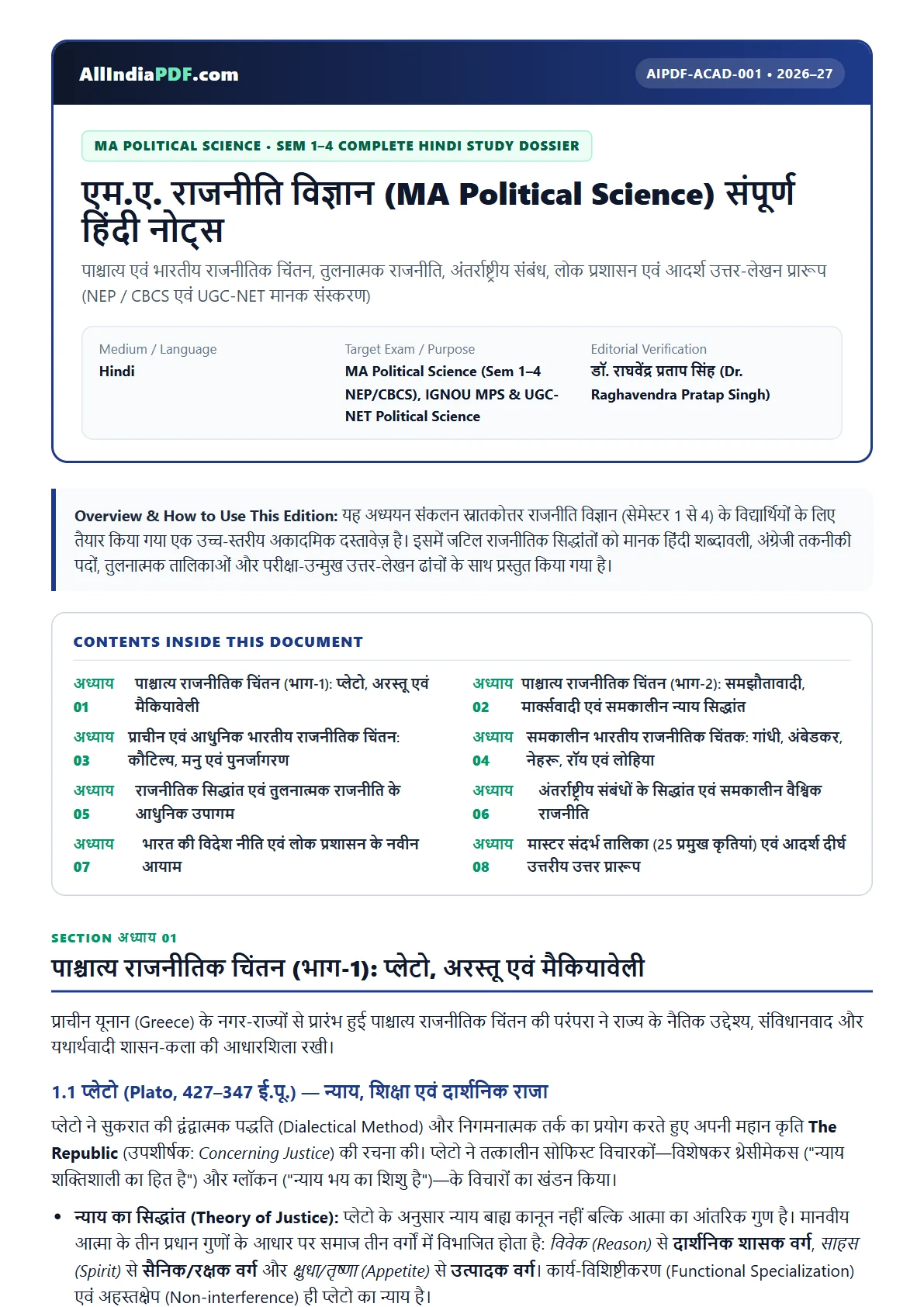
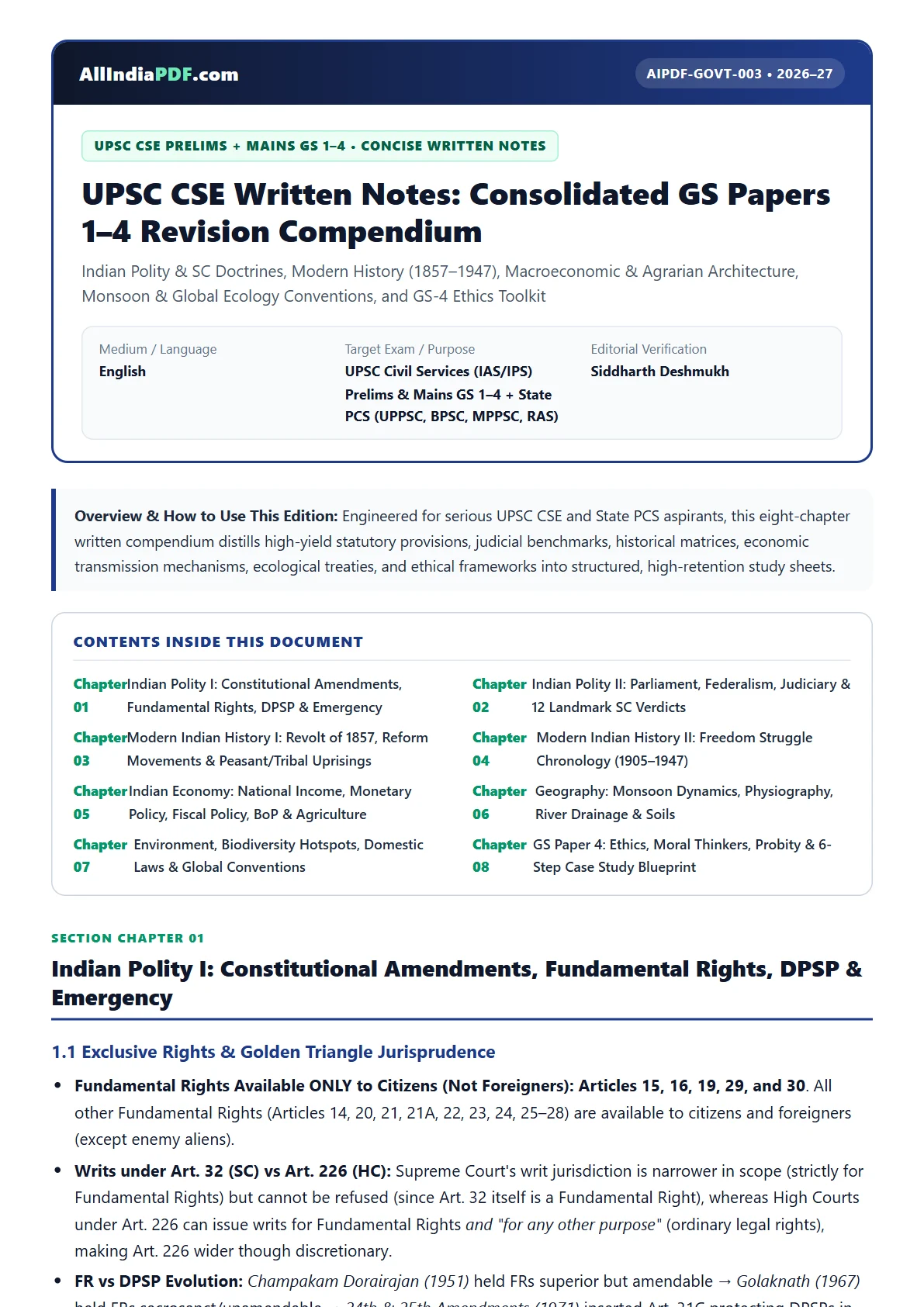
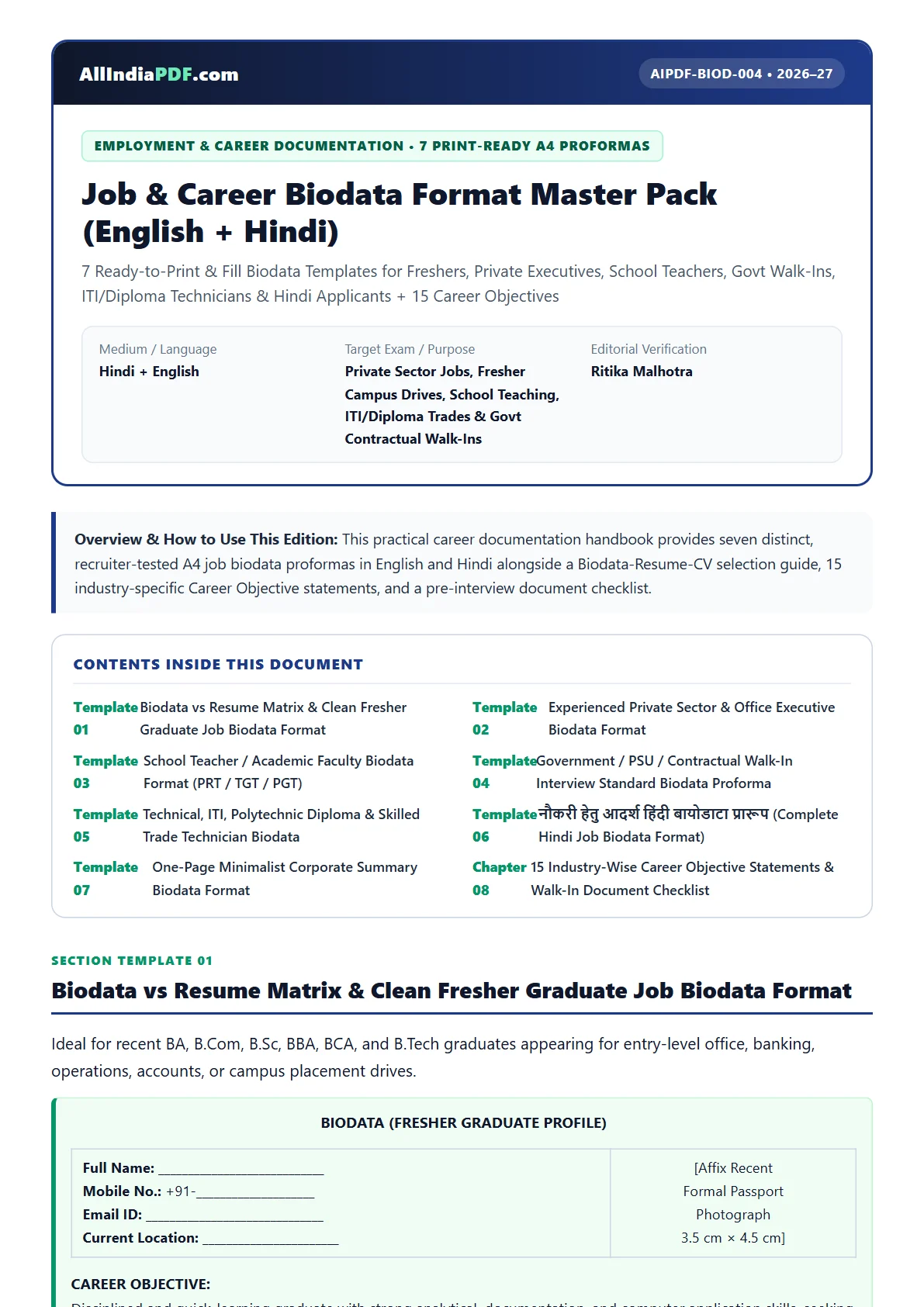
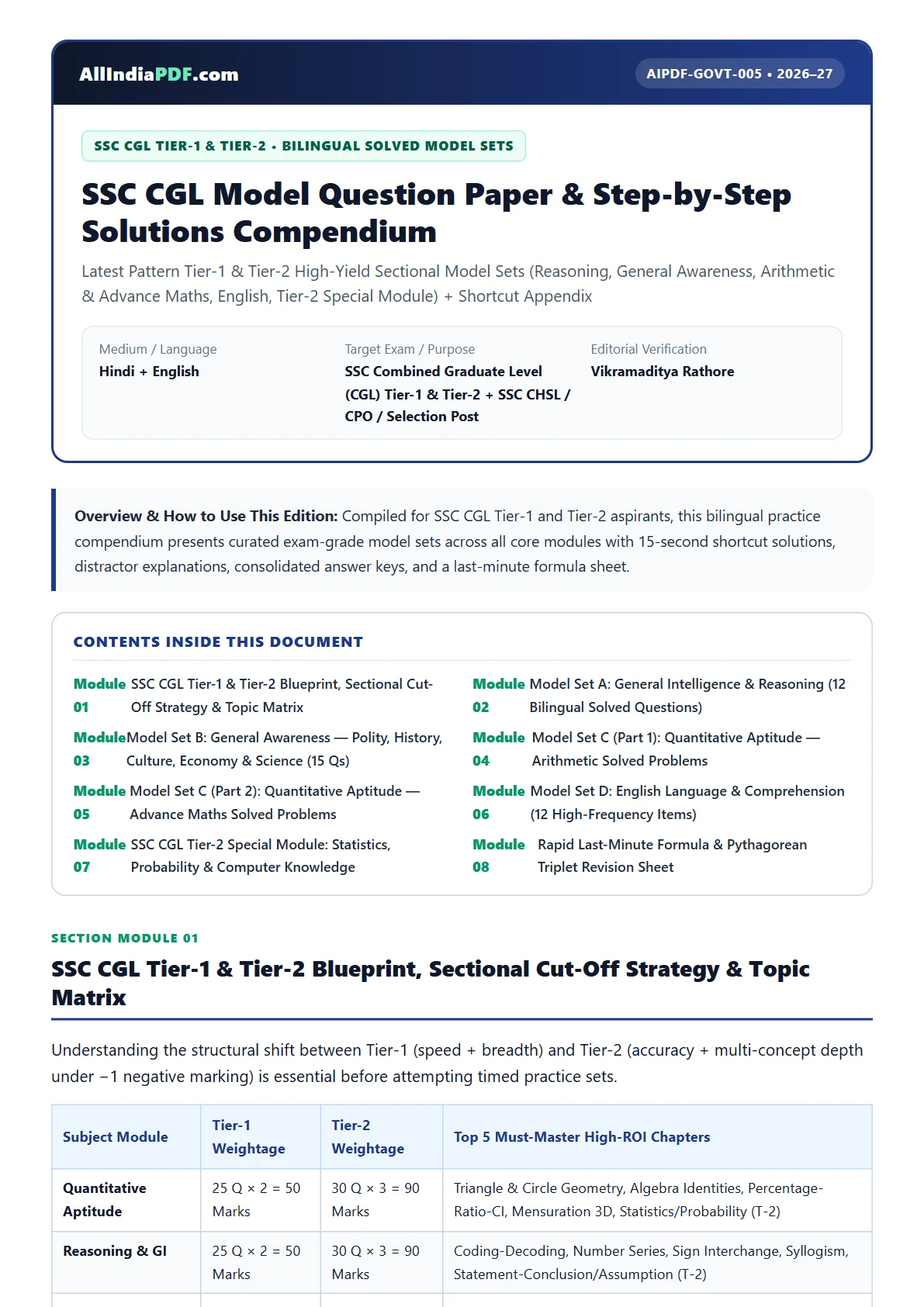
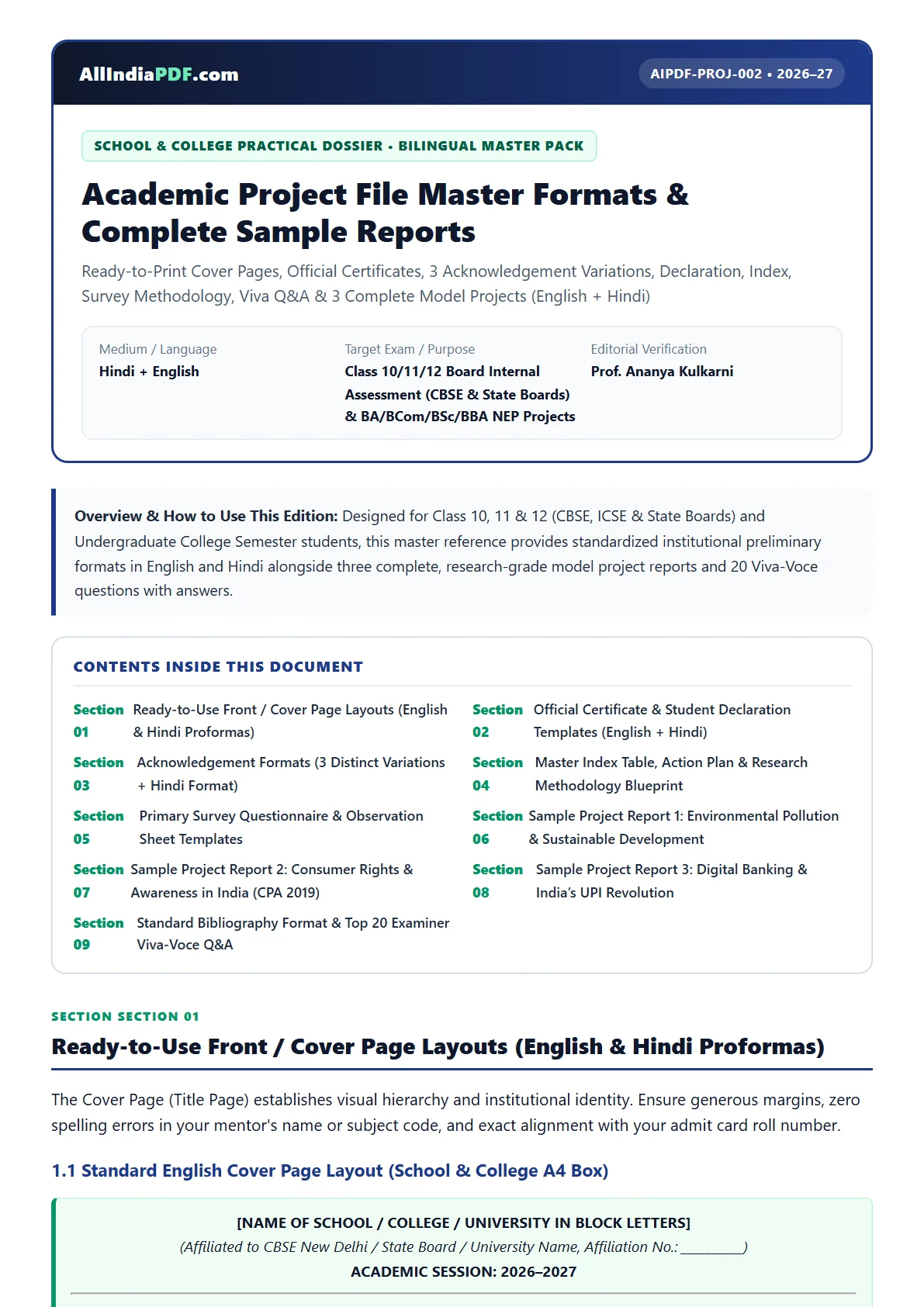
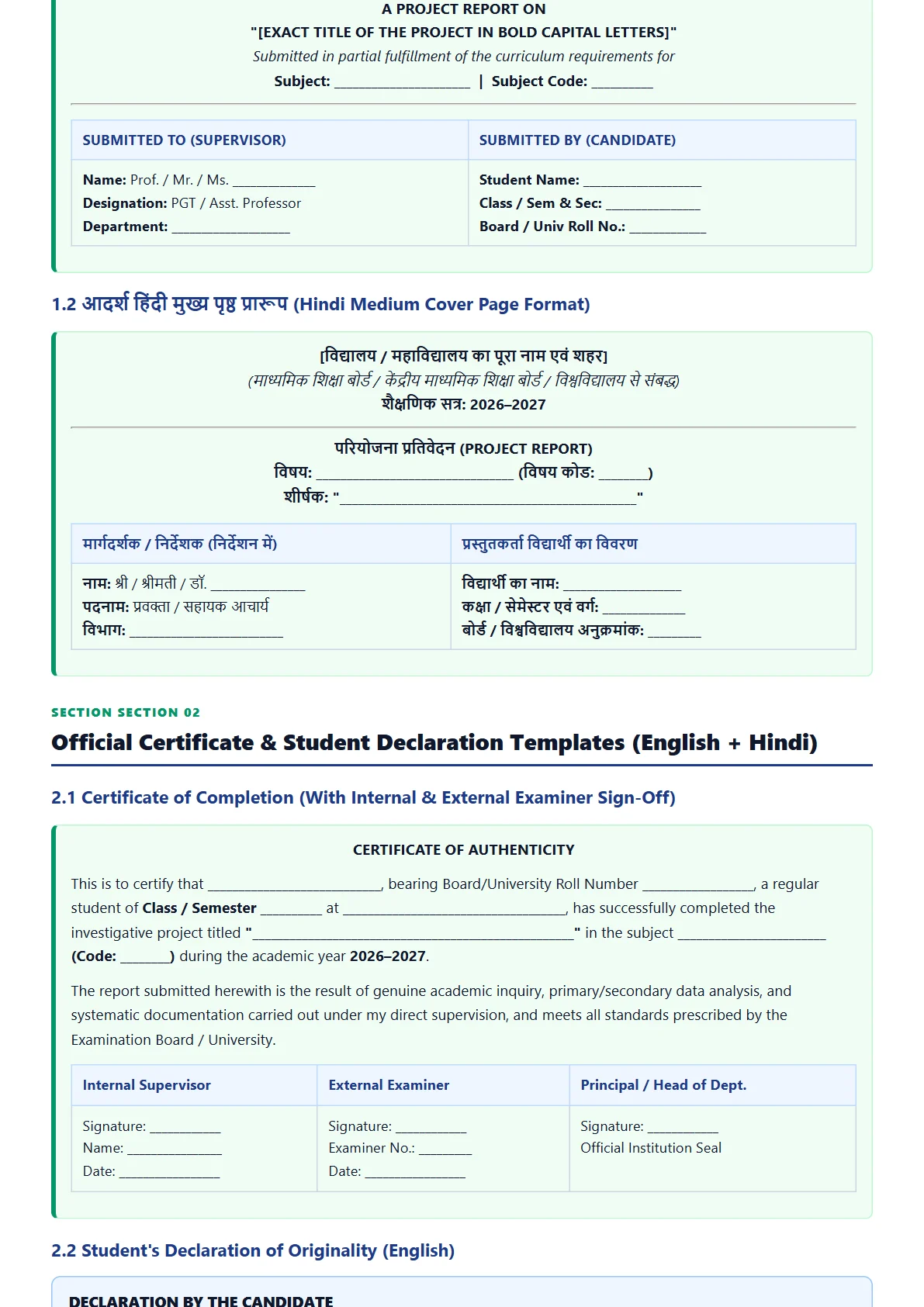
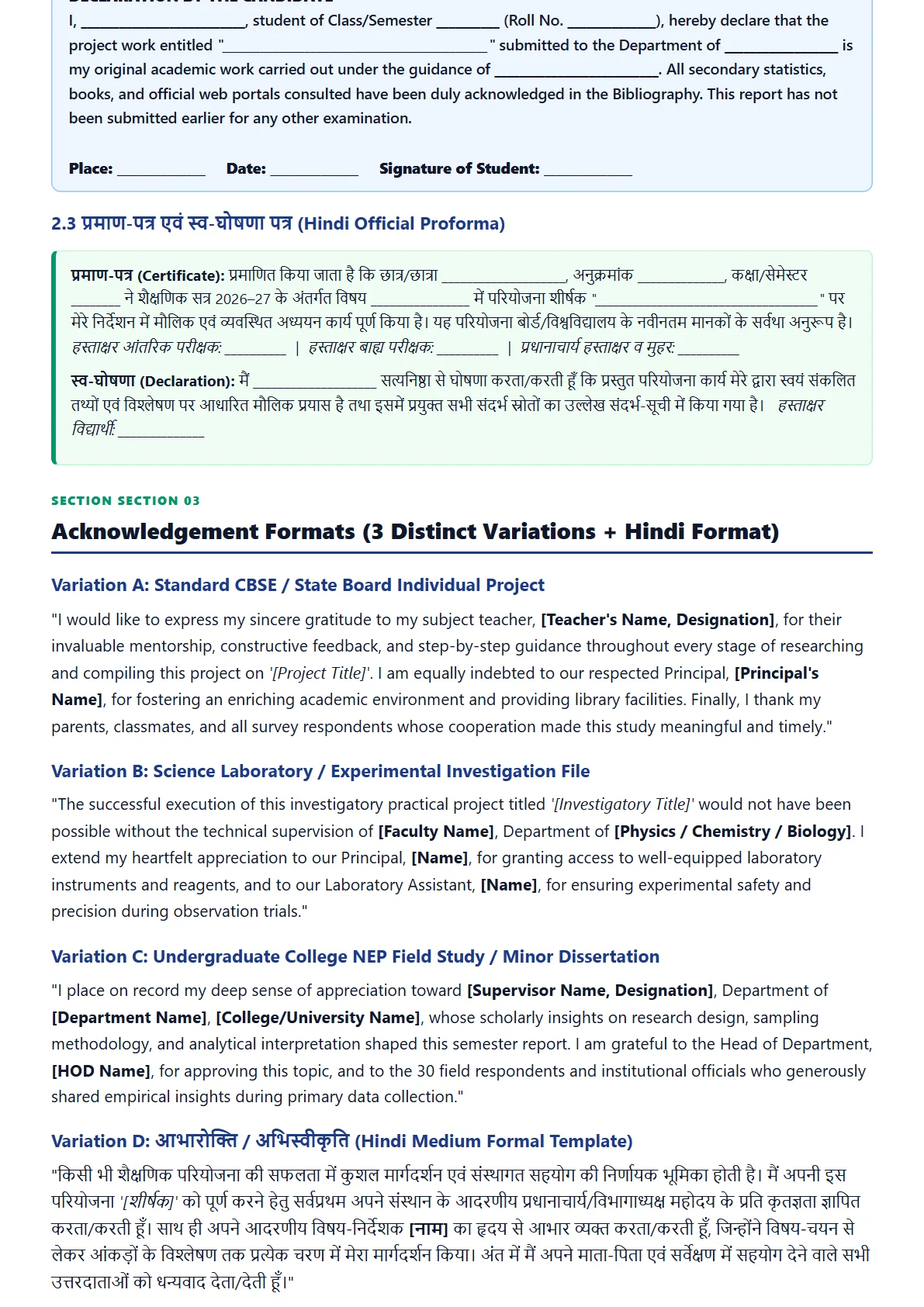
Inside Document Preview (Pages 1–3 of 11)
Actual print-ready pages from the verified 2026–27 PDF compilation.
Continue Reading All 11 Full Pages Offline
Verify your email address to access the complete 11-page printable PDF with all chapters, tables, and solved examples.
In This Study Guide
- 1.1. Ideal Page Sequence & Marking Rubric of an Academic Project File
- 2.2. Word-for-Word Certificate, Declaration & Acknowledgement Formats
- 3.3. Research Methodology, Observation Tables & Bibliography Standards
- 4.4. High-Scoring Interdisciplinary Project Topics & Viva-Voce Strategy
- 5.Complete PDF Chapter Breakdown
- 6.Frequently Asked Questions
Key Highlights
- Standardized A4 Front/Cover Page, Certificate (Internal + External Examiner + Principal sign-off), and Student Declaration formats in both English and Hindi
- Three distinct formal Acknowledgement variations tailored for Individual Board Projects, Science Practicals, and College Semester Field Studies
- Structured Index/Table of Contents, Research Action Plan, Primary Survey Questionnaire, and Observation Table layouts
- Three full-length, data-backed Sample Project Reports: Environmental Pollution & Sustainable Development, Consumer Rights in India, and Digital Banking & UPI
- APA/NCERT-compliant Bibliography & Webliography citation templates plus Top 20 External Examiner Viva-Voce Questions & Answers
Whether you are preparing a Class 10 Social Science internal assessment, a Class 12 CBSE/ICSE board practical dossier carrying 20 to 30 crucial marks, or an undergraduate NEP semester dissertation, a well-structured project file directly determines how internal guides and visiting external examiners evaluate your academic rigor. Across Science, Commerce, Humanities, and Management streams, examiners spend the first ninety seconds inspecting the sequence of preliminary pages—Cover Page, Certificate, Student Declaration, Acknowledgement, and Index—before assessing research methodology, data analysis, and Viva-Voce clarity.
Many students lose 4 to 6 easily achievable marks not because they lack subject knowledge, but due to missing examiner signature blocks, informal acknowledgement phrasing, unnumbered pages in the Table of Contents, or absent primary observation tables and bibliography entries. This comprehensive bilingual (English + Hindi) academic reference brings together institutional-grade preliminary page formats, research methodology blueprints, survey templates, bibliography rules, and three complete interdisciplinary project structures aligned with CBSE, State Board (UP, MP, Bihar, RBSE, Maharashtra), and University NEP 2020 guidelines.
1. Ideal Page Sequence & Marking Rubric of an Academic Project File
An authoritative school or college project file follows a strict academic order so that any external examiner flipping through the binder can verify originality, methodology, and findings effortlessly. Mixing preliminary certificates after the introduction or omitting page numbers in the index creates an impression of hasty compilation.
| Page Order | Section Title (English / हिंदी शीर्षक) | Core Academic Purpose & Key Elements |
|---|---|---|
| Page 01 | Title / Cover Page (मुख्य आवरण पृष्ठ) | Institution name, project title, subject & code, session, student roll no., and supervisor name. |
| Page 02 | Certificate of Authenticity (प्रमाण-पत्र) | Official verification with signature blocks for Internal Teacher, External Examiner, and Principal/HOD. |
| Page 03 | Student Declaration (स्व-घोषणा पत्र) | Formal statement affirming that the study is original work and not copied from unauthorized sources. |
| Page 04 | Acknowledgement (आभारोक्ति / अभिस्वीकृति) | Courteous academic gratitude toward the institution head, subject guide, and survey participants. |
| Page 05 | Index / Table of Contents (अनुक्रमणिका) | Serial number, topic/chapter heading, exact page range, and teacher’s remarks/initials column. |
| Pages 06–07 | Introduction, Objectives & Methodology | Statement of problem, 4–5 specific objectives, scope of study, and primary/secondary data tools. |
| Pages 08–16 | Core Chapters, Case Study & Data Analysis | Thematic sub-sections, government statistics, survey tables, bar/pie interpretations, and findings. |
| Pages 17–18 | Conclusion, Suggestions & Limitations | Actionable policy/practical recommendations and honest methodological limitations of the study. |
| Page 19 | Bibliography / Webliography (संदर्भ-ग्रंथ सूची) | Textbooks, official ministry reports, journals, and verified institutional portals consulted. |
2. Word-for-Word Certificate, Declaration & Acknowledgement Formats
Preliminary pages must use formal third-person or dignified first-person academic prose. Avoid decorative slang or overly casual expressions. Below are verified templates ready to adapt for handwritten or A4 printed files:
"This is to certify that [Student Name], Examination Roll No. [Roll Number], a bonafide student of [Class XII / Semester IV — Stream] at [Institution Name], has satisfactorily completed the project report titled '[Exact Project Title]' in [Subject Name & Code] during the academic session 2026–27 under my supervision. This report embodies original investigative work and fulfills the curriculum guidelines prescribed by [CBSE / State Board / University Name]."
Signatures: [Internal Subject Teacher] | [External Examiner] | [Principal / Institution Seal]
Formal Acknowledgement Structure (English): Express appreciation in descending institutional order—begin with the Principal or Head of Department for providing academic infrastructure, thank your Subject Teacher/Supervisor for conceptual guidance and periodic review, acknowledge librarians or survey respondents for primary inputs, and conclude with a concise line thanking parents and peers for encouragement.
हिंदी माध्यम के विद्यार्थियों हेतु आदर्श 'आभारोक्ति' (Acknowledgement in Hindi): "मैं अपनी इस परियोजना कार्य '[परियोजना का शीर्षक]' को सफलतापूर्वक पूर्ण करने के लिए सर्वप्रथम अपने विद्यालय/महाविद्यालय के आदरणीय प्रधानाचार्य जी के प्रति हृदय से आभार व्यक्त करता/करती हूँ, जिन्होंने मुझे उत्कृष्ट शैक्षणिक वातावरण प्रदान किया। मैं अपने विषय-अध्यापक/निर्देशक श्री/श्रीमती [नाम] का विशेष धन्यवाद करता/करती हूँ, जिनके कुशल मार्गदर्शन, अमूल्य सुझावों और निरंतर प्रेरणा से यह अध्ययन व्यवस्थित रूप ले सका।"
3. Research Methodology, Observation Tables & Bibliography Standards
Even a 15-page school project stands out dramatically when it includes a dedicated Research Methodology (शोध प्रविधि) page explaining how information was gathered and analyzed:
- Primary Data (प्राथमिक आंकड़े): Information collected firsthand by the student through a structured 10-item questionnaire (Google Form or printed survey sheet of 25–30 local respondents), field visit, laboratory experiment, or structured interview.
- Secondary Data (द्वितीयक आंकड़े): Verified statistics sourced from NCERT textbooks, Reserve Bank of India (RBI) bulletins, Central Pollution Control Board (CPCB) reports, Economic Survey, National Family Health Survey, or peer-reviewed articles.
- Sample Size & Analytical Tools: Clearly state the sample size (e.g.,
N = 30households or respondents), geographical area, and simple statistical representation such as percentage distribution tables (Percentage = (Favorable Responses ÷ Total Sample) × 100).
Correct Bibliography & Webliography Format: Never write bare domain names like "google.com" or "wikipedia.org" on your final page. Cite exact institutional sources using the format: Author/Organization (Year). Title of Report or Textbook. Publisher / Official Portal URL (Accessed Date)—for example, National Council of Educational Research and Training (2026). Contemporary India – II / Introductory Macroeconomics. NCERT New Delhi.
4. High-Scoring Interdisciplinary Project Topics & Viva-Voce Strategy
During the 5-minute external Viva-Voce, examiners rarely ask rote textbook definitions; instead, they test whether you genuinely investigated your chosen file. Prepare crisp answers to these four universal examiner prompts:
- Why did you choose this specific project topic? Connect your topic to a real-world local observation or contemporary national policy (e.g., rising urban Air Quality Index, UPI adoption among street vendors, or consumer grievance redressal via the e-Daakhil portal).
- What is the single most surprising finding from your data or case study? Quote one concrete percentage or comparison from your observation table—for instance, "While 88% of surveyed citizens knew the 'Jago Grahak Jago' slogan, only 24% knew how to file an online complaint on the National Consumer Helpline."
- What were the limitations of your project? Mention realistic constraints such as limited geographic sample size (30 local respondents) and time-bound academic scope.
- If given policy authority, what two solutions would you implement? Refer directly to the 'Recommendations' page of your project file.
| Academic Stream | High-Scoring Project File Themes (2026–27) |
|---|---|
| Commerce & Economics | Digital Banking & UPI Ecosystem; Consumer Awareness (CPA 2019); GST Impact on MSMEs; Stock Market Financial Literacy. |
| Social Science & Humanities | Environmental Pollution & Sustainable Development; Disaster Management Plan; Women Self-Help Groups (SHGs); Constitutional Values. |
| Science & EVS | Rainwater Harvesting & Groundwater Recharge; Solar Micro-Grids; E-Waste Recycling Audit; Water Quality pH & TDS Study. |
What’s Included Inside the Complete 11-Page PDF
Structured specifically for fast revision, exam hall recall, and clean A4 printing:
Print-Ready Front Page, Certificate & Declaration Proformas
Clean A4 institutional layouts with exact placeholders for Board Roll Number, Registration ID, Subject Code, Session 2026–27, Internal Guide, and External Examiner signatures in English and Hindi (प्रमाणीकरण एवं घोषणा-पत्र).
3 Formal Acknowledgement Variations (English + Hindi)
Polished academic wording expressing gratitude to the Principal, Subject Mentor, Lab Assistant, Survey Respondents, and Family without grammatical clichés.
Index, Action Plan, Observation & Survey Data Templates
Ready-to-fill Master Table of Contents, 4-week project execution schedule, 10-question respondent survey grid, and percentage analysis tables.
3 Complete Multi-Section Sample Project Reports
Ready reference reports on (1) Environmental Pollution & Sustainable Development, (2) Consumer Rights & Awareness under CPA 2019, and (3) Digital Banking & India’s UPI Ecosystem.
Bibliography, Webliography & Viva-Voce Master Bank
Correct academic referencing format for NCERT books, journals, and government portals alongside 20 high-frequency Viva questions and model answers.
Ready to download the full 11-page printable PDF?
Instant access + backup copy delivered straight to your verified email address.
Frequently Asked Questions
Should a school or college project file be handwritten or computer-printed?+
For CBSE Class 10 and Class 12 board assessments (Social Science, Economics, Business Studies, Sociology, Political Science, Hindi/English ASL), boards generally require the main body to be neatly handwritten on one-side ruled A4 sheets, while the Cover Page, Certificate, Index, and data charts may be printed or neatly formatted as instructed by your subject teacher. College dissertations (BBA, BCom, BCA, BA) usually mandate typed A4 pages in 12pt Times New Roman with 1.5 line spacing.
What is the difference between Acknowledgement and Certificate in a project file?+
The Certificate is an official institutional endorsement signed by your Internal Teacher, External Examiner, and Principal certifying that the project is authentic academic work. The Acknowledgement is written and signed by the student to thank mentors, school authorities, and respondents who supported the study.
How many pages should an ideal Class 12 or undergraduate project file contain?+
A standard CBSE/State Board Class 10–12 project file should span 15 to 25 well-organized A4 sheets (including preliminary pages, illustrations, survey tables, and bibliography). Undergraduate semester project reports typically range between 25 and 40 pages.
Can I use bilingual (Hindi or English) templates from this guide for State Board practicals?+
Yes. Both English formats and pure Devanagari Hindi formats (मुख्य पृष्ठ, प्रमाण-पत्र, स्व-घोषणा, आभारोक्ति, अनुक्रमणिका एवं संदर्भ सूची) are included so UP Board, MP Board, Bihar Board, RBSE, and CBSE/ICSE students can directly follow their medium of instruction.
What documents or visuals make a project file score full marks in practical evaluation?+
Including a clear Statement of Objectives, a 10-question primary survey summary table, 2–3 cleanly labeled statistical charts or case boxes, actionable conclusions, and a properly formatted Bibliography/Webliography consistently earns top-bracket practical marks.
Editorial Accuracy & Syllabus Verification (2026–27)
This guide was compiled by Prof. Ananya Kulkarni (Senior Academic Coordinator & CBSE External Practical Examiner (M.Com, M.Ed)) and reviewed by Dr. Suresh Chandra Verma (Associate Professor & University NEP Internship/Project Nodal Officer) in accordance with our Editorial Policy. Found a syllabus update or typo? Write to support@allindiapdf.com.