GK Quiz with Answers & Explanations: High-Yield Bilingual General Knowledge Question Bank (Hindi + English)
Topic-wise General Knowledge (GK) Quiz and Static GK Super-Tables covering Indian Polity, History, Geography, General Science, Economy & International Organizations for SSC, Railway, State PCS, Police & Defence Exams.
Get the complete formatted PDF right in your inbox & instant browser download.
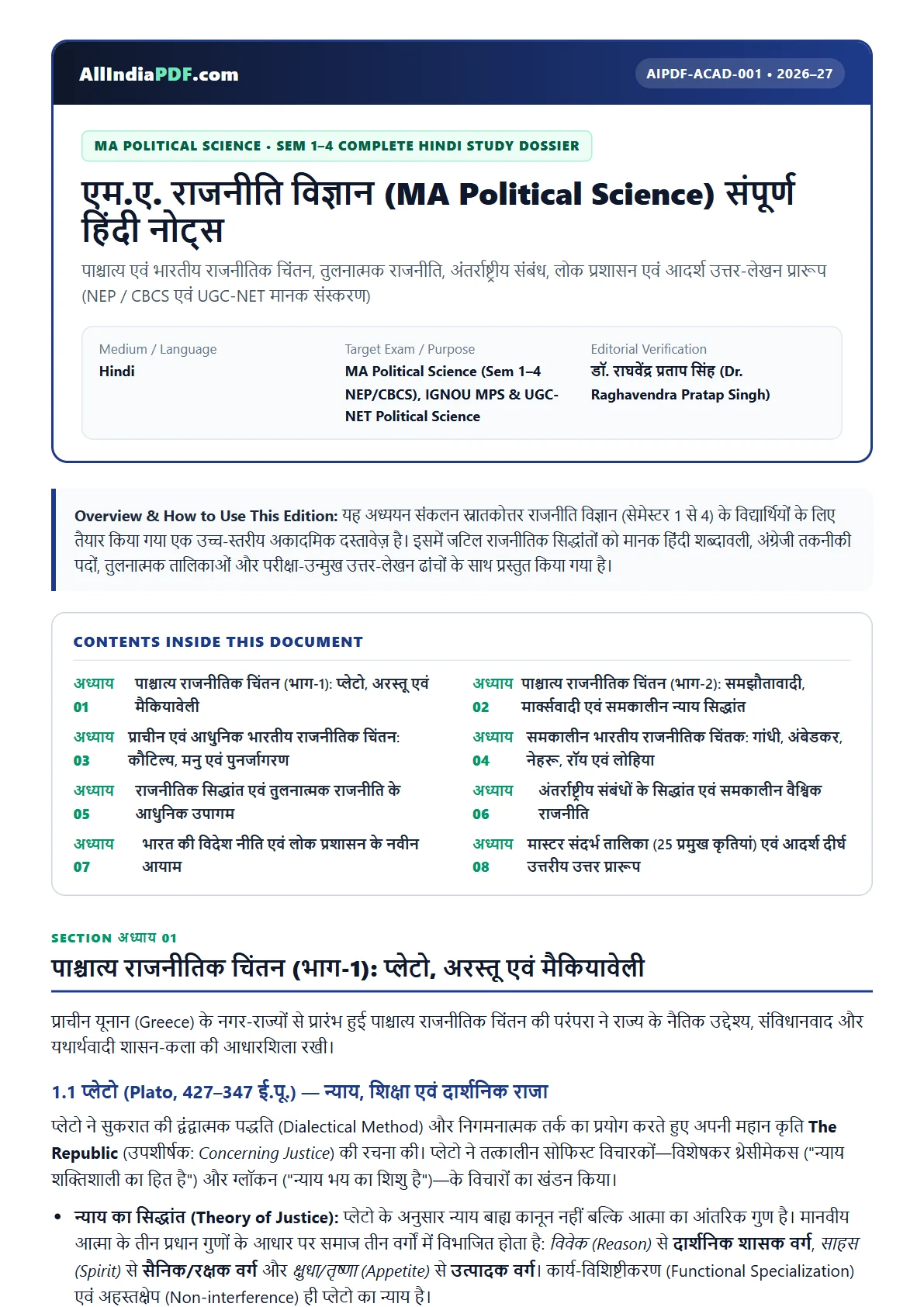
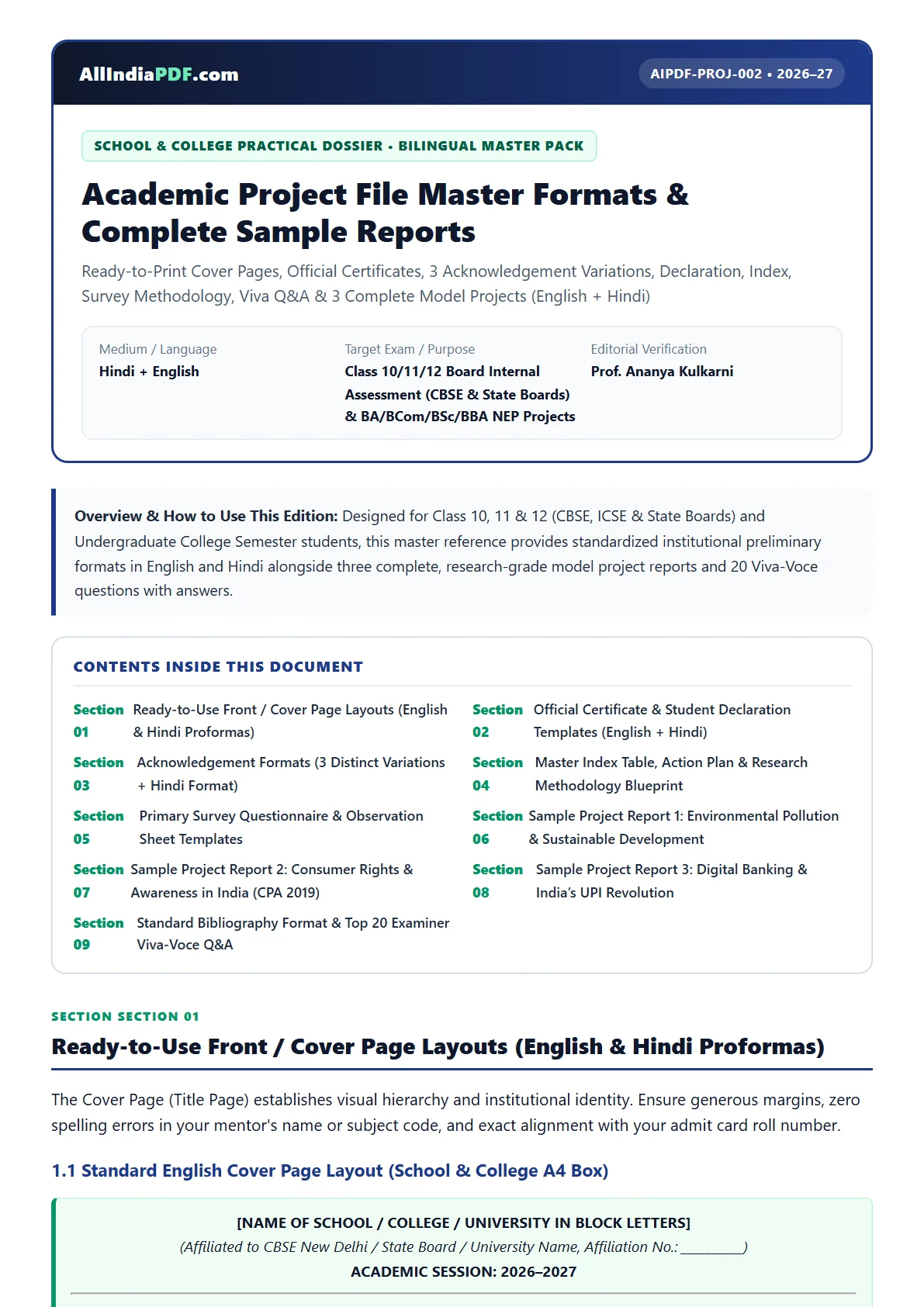
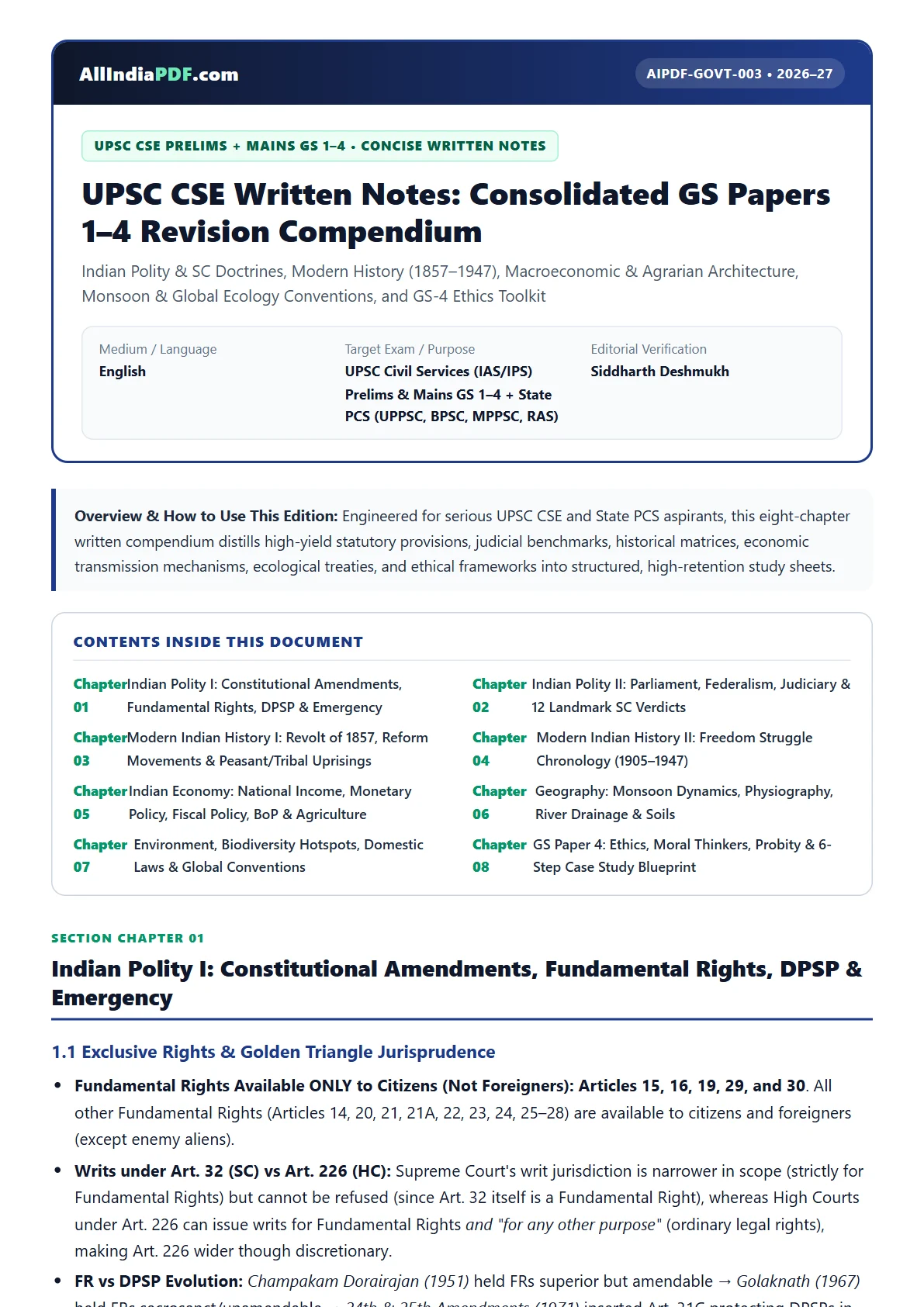
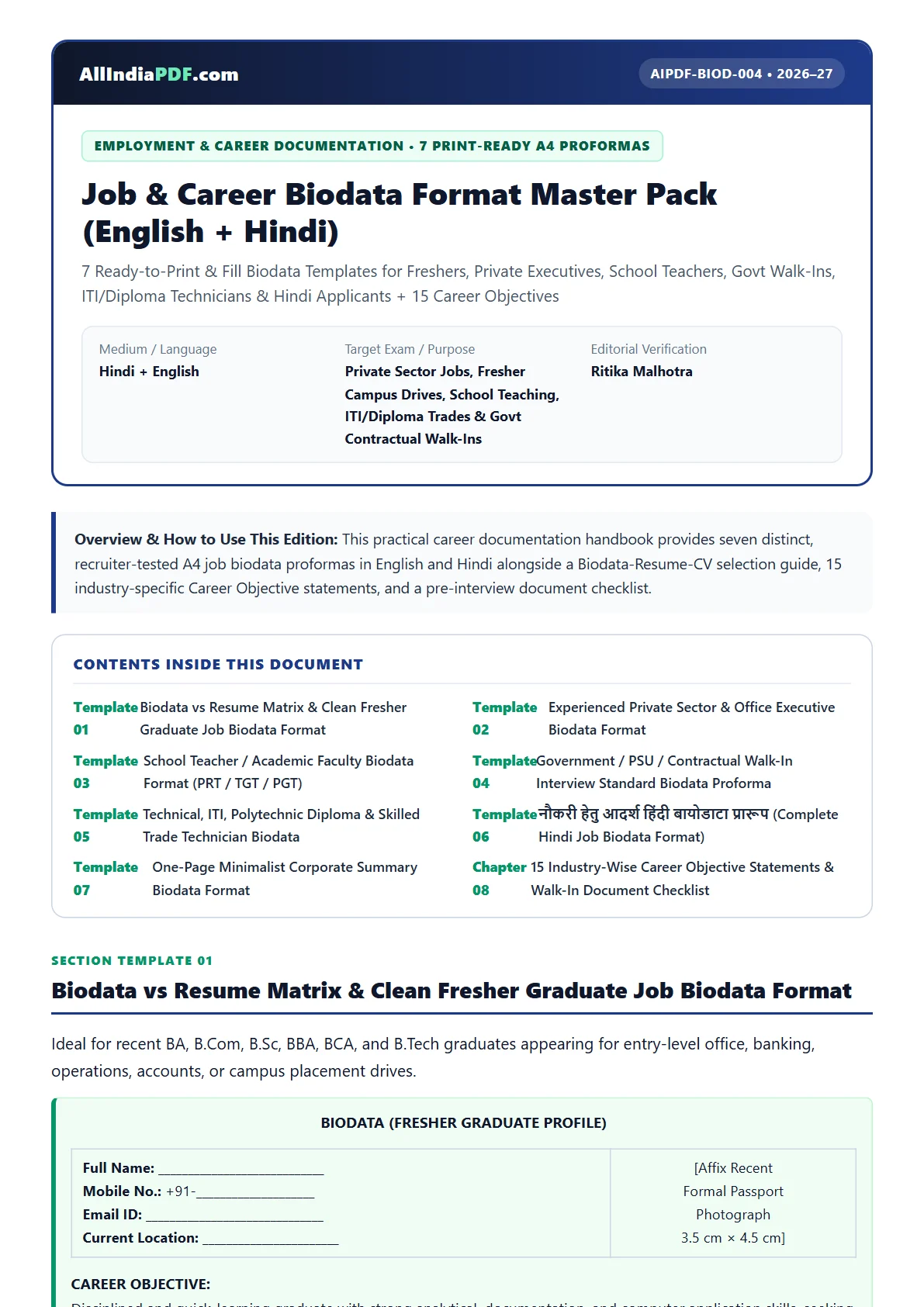
Inside Document Preview (Pages 1–3 of 15)
Actual print-ready pages from the verified 2026–27 PDF compilation.
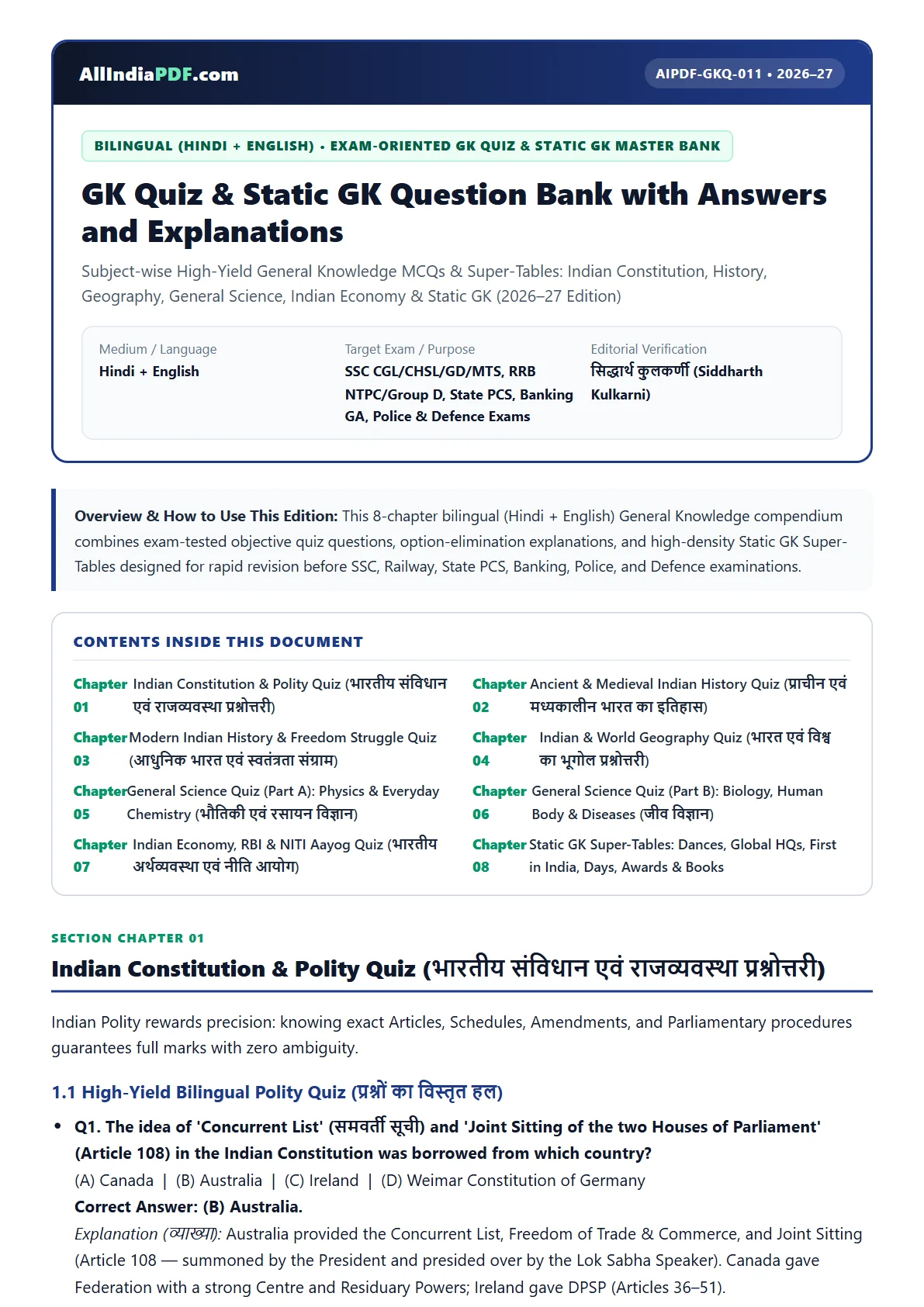
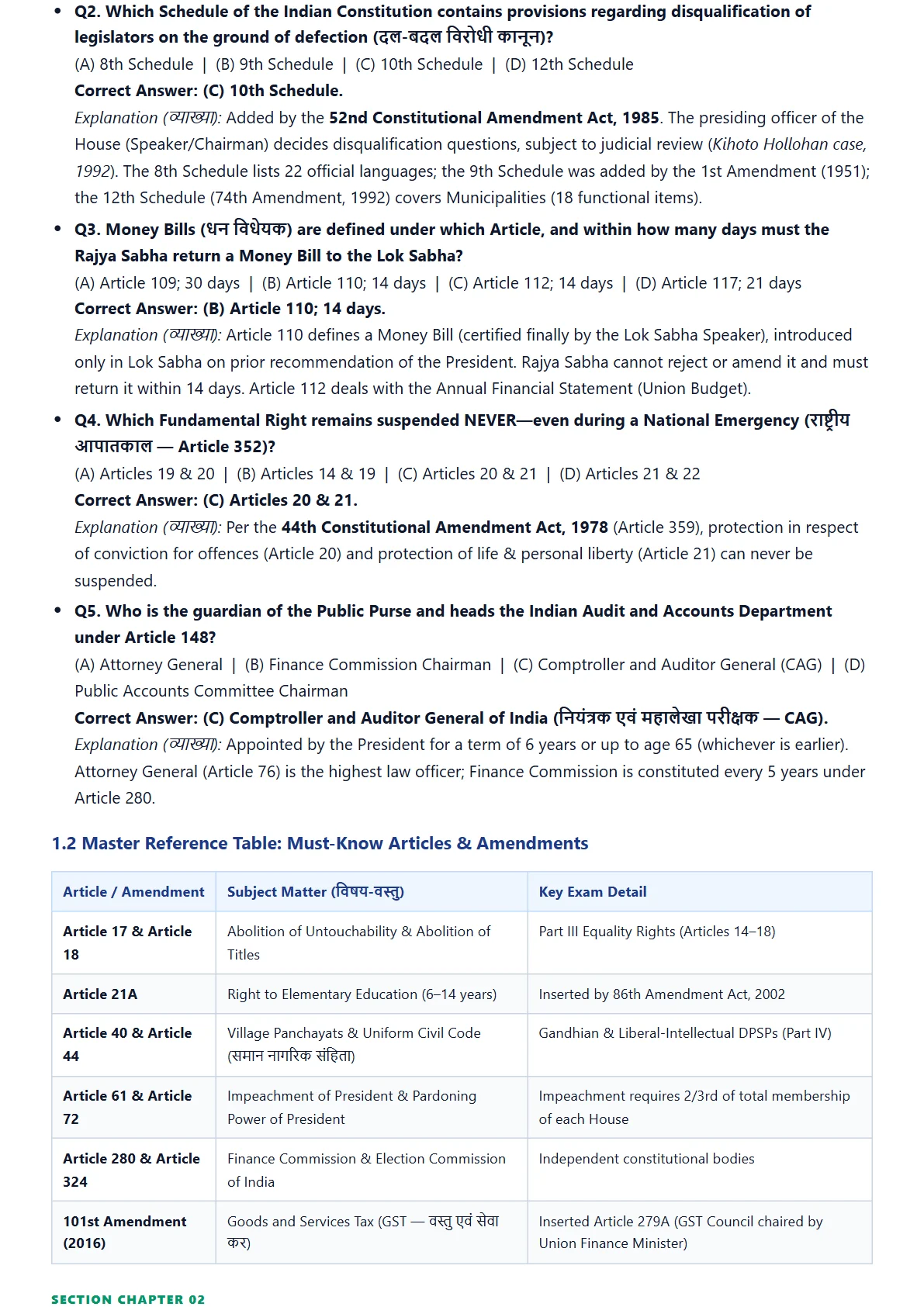
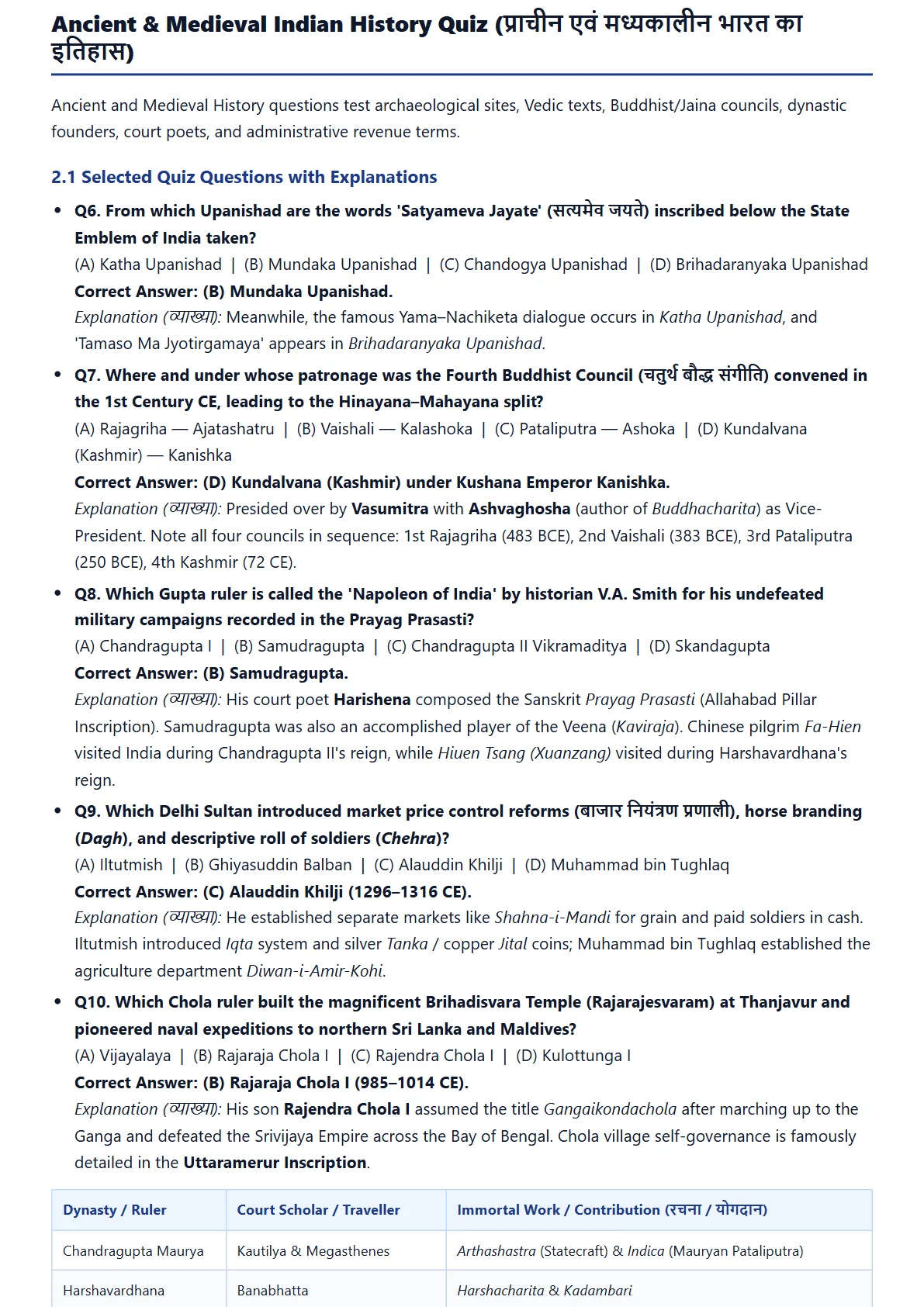
Continue Reading All 15 Full Pages Offline
Verify your email address to access the complete 15-page printable PDF with all chapters, tables, and solved examples.
In This Study Guide
- 1.1. Indian Polity & History GK Quiz (संविधान एवं भारतीय इतिहास प्रश्नोत्तरी)
- 2.2. Indian & World Geography GK Quiz: Rivers, Passes, Dams & National Parks
- 3.3. General Science & Indian Economy Quiz (सामान्य विज्ञान एवं अर्थव्यवस्था)
- 4.4. Static GK Super-Tables: Classical Dances, International HQs & Quiz Strategy
- 5.Complete PDF Chapter Breakdown
- 6.Frequently Asked Questions
Key Highlights
- Bilingual (Hindi + English) exam-grade GK Quiz covering the 6 highest-weightage General Studies pillars asked in SSC, Railway, Police, Defence, and State Civil Services exams
- Detailed conceptual explanation (व्याख्या) with every question so one solved MCQ prepares 4 related exam facts through option-elimination logic
- Complete Indian Constitution & Polity coverage: Fundamental Rights, DPSP, Constitutional Amendments, Writs, Parliamentary Committees, and Schedules
- Dedicated Geography & General Science modules covering Rivers, Dams, Himalayan Passes, National Parks, SI Units, Everyday Chemistry, and Human Biology/Vitamins
- High-density Static GK Super-Tables: 8 Classical Dances, UN & Global Organization HQs, First in India, Important National/International Days, Major Awards & Landmark Books
Preparing with a structured GK Quiz is the fastest, most reliable way to convert passive reading into high-accuracy exam marks. In competitive examinations conducted by SSC (CGL, CHSL, MTS, Selection Post, GD Constable), Railway Recruitment Boards (RRB NTPC, ALP, Technician, Group D), State Public Service Commissions, Police Recruitment Boards, and Defence agencies (CDS, NDA, AFCAT), the General Awareness section acts as the ultimate rank-decider because 25 questions can be solved in under 7 minutes—provided your conceptual recall is sharp.
एक उत्कृष्ट सामान्य ज्ञान प्रश्नोत्तरी (Bilingual GK Quiz in Hindi + English) केवल सही विकल्प (A/B/C/D) बताने तक सीमित नहीं रहती, बल्कि प्रत्येक प्रश्न के साथ उससे जुड़े 3 से 4 संभावित परीक्षा तथ्यों की सटीक व्याख्या भी प्रस्तुत करती है। नीचे दिए गए विषयवार (Topic-wise) अध्ययन मॉड्यूल में भारतीय संविधान, इतिहास, भारत एवं विश्व का भूगोल, सामान्य विज्ञान (भौतिकी, रसायन, जीव विज्ञान), भारतीय अर्थव्यवस्था एवं नीति आयोग तथा स्टैटिक जीके सुपर-टेबल्स (Static GK Super-Tables) के सर्वाधिक पूछे जाने वाले प्रश्नों और मानक संदर्भ सारणियों को द्विभाषी रूप में संकलित किया गया है।
1. Indian Polity & History GK Quiz (संविधान एवं भारतीय इतिहास प्रश्नोत्तरी)
Indian Polity and Modern/Ancient History together contribute nearly 30% to 35% of traditional General Studies questions. Practising these bilingual questions builds clarity on exact constitutional articles, amendments, and freedom struggle chronology.
- Q1. Which Article of the Indian Constitution did Dr. B.R. Ambedkar call the "Heart and Soul of the Constitution" (संविधान की आत्मा और हृदय)?
Answer: Article 32 (Right to Constitutional Remedies / संवैधानिक उपचारों का अधिकार). Under Article 32, the Supreme Court issues five writs—Habeas Corpus, Mandamus, Prohibition, Certiorari, and Quo-Warranto—to enforce Fundamental Rights, whereas High Courts issue writs under Article 226. - Q2. Fundamental Duties (मौलिक कर्तव्य) were incorporated into Part IVA (Article 51A) by which Constitutional Amendment and on whose recommendation?
Answer: 42nd Constitutional Amendment Act, 1976 on the recommendation of the Sardar Swaran Singh Committee (inspired by the erstwhile USSR Constitution). Initially 10 duties were added; the 11th duty (education for children aged 6–14 years) was added by the 86th Amendment Act, 2002. - Q3. At which Indus Valley Civilization site was the world's earliest known tidal dockyard (गोदीबाड़ा / बंदरगाह) discovered?
Answer: Lothal (Gujarat), situated on the banks of the Bhogavo river (a tributary of Sabarmati) near the Gulf of Khambhat, excavated by S.R. Rao in 1954. - Q4. Who presided over the historic Lahore Session of the Indian National Congress (December 1929) that passed the 'Purna Swaraj' (पूर्ण स्वराज) resolution?
Answer: Jawaharlal Nehru. On the banks of the Ravi river, 26 January 1930 was declared to be celebrated as the first Independence Day (Purna Swaraj Diwas), which is why the Constitution of India later came into full force on 26 January 1950. - Q5. Which Rock Edict of Emperor Ashoka gives a vivid account of the Kalinga War (261 BCE) and his shift from Bherighosha to Dhammaghosha?
Answer: Major Rock Edict XIII (13वां वृहत शिलालेख). Ashoka's inscriptions in Brahmi script were first deciphered by James Prinsep in 1837.
| Constitutional / Historical Landmark | Key Provision / Event (प्रमुख तथ्य) | High-Yield Exam Pointer |
|---|---|---|
| 61st Amendment Act, 1988 | Voting age reduced from 21 to 18 years (मतदान आयु 21 से घटाकर 18 वर्ष) | Amended Article 326 (Universal Adult Suffrage) |
| 73rd Amendment Act, 1992 | Constitutional status to Panchayati Raj Institutions (पंचायती राज) | Added Part IX (Articles 243–243O) & 11th Schedule (29 subjects) |
| Permanent Settlement (1793) | Introduced by Lord Cornwallis in Bengal, Bihar & Odisha | Zamindari system; Ryotwari was led by Munro & Read |
| Poona Pact (September 1932) | Signed between Mahatma Gandhi and Dr. B.R. Ambedkar | Reserved seats for Depressed Classes within joint electorates |
2. Indian & World Geography GK Quiz: Rivers, Passes, Dams & National Parks
Geography questions in modern CBT shifts focus heavily on spatial matching: river origins and tributaries, Himalayan passes connecting strategic valleys, multi-purpose dams, and UNESCO/Protected Biosphere networks.
- Q6. Which peninsular river of India is known as 'Dakshin Ganga' (वृद्ध गंगा) and forms the largest river system in Peninsular India?
Answer: Godavari River (1,465 km). It originates at Trimbakeshwar in Nashik district (Maharashtra) and drains through Maharashtra, Telangana, Chhattisgarh, Odisha, and Andhra Pradesh into the Bay of Bengal. Major tributaries: Pranhita, Indravati, Sabari, Manjira, Penganga, and Wardha. - Q7. Which is the only floating National Park in the world (विश्व का एकमात्र तैरता हुआ राष्ट्रीय उद्यान), famous for 'Phumdis' and the Brow-antlered Sangai deer?
Answer: Keibul Lamjao National Park, located on Loktak Lake in Manipur (Northeast India's largest freshwater lake). - Q8. Which channel separates the Andaman Islands from the Nicobar Islands in the Bay of Bengal?
Answer: Ten Degree Channel (10° North Latitude). Similarly, the Eight Degree Channel separates Minicoy (Lakshadweep) from Maldives, and the Nine Degree Channel separates Minicoy from the main Lakshadweep archipelago. - Q9. Which mountain pass connects Srinagar with Leh across the Zanskar Range?
Answer: Zoji La Pass. Meanwhile, Atal Tunnel (9.02 km) is built under Rohtang Pass in the Pir Panjal range of Himachal Pradesh, and Nathu La & Jelep La are located in Sikkim.
| Dam / National Park / Pass | River / Mountain Range | State / UT (राज्य / केंद्र शासित प्रदेश) |
|---|---|---|
| Tehri Dam (Highest Dam in India — 260.5 m) | Bhagirathi River (भागीरथी नदी) | Uttarakhand |
| Hirakud Dam (Longest Earthen Dam — 25.79 km total) | Mahanadi River (महानदी) | Odisha |
| Nagarjuna Sagar Dam | Krishna River (कृष्णा नदी) | Telangana – Andhra Pradesh border |
| Kaziranga National Park (One-horned Rhinoceros) | Brahmaputra Floodplain | Assam |
| Shipki La Pass (Sutlej enters India here) | Zanskar / Great Himalayas | Himachal Pradesh (Kinnaur) |
3. General Science & Indian Economy Quiz (सामान्य विज्ञान एवं अर्थव्यवस्था)
General Science (NCERT Class 9 & 10 standard) and Indian Economy test everyday scientific principles, human physiology, chemical names, and institutional frameworks like RBI and NITI Aayog.
- Q10. Why do optical fibres transmit high-speed internet signals over long distances with almost zero loss of energy?
Answer: Total Internal Reflection (पूर्ण आंतरिक परावर्तन), pioneered by Indian-born physicist Narinder Singh Kapany. Mirage formation in deserts and the brilliance of cut diamonds also work on Total Internal Reflection. - Q11. What is the chemical name and formula of Baking Soda (खाने का सोडा) vs Washing Soda (धोने का सोडा)?
Answer: Baking Soda is Sodium Hydrogen Carbonate / Sodium Bicarbonate (NaHCO3), whereas Washing Soda is Sodium Carbonate Decahydrate (Na2CO3·10H2O). Plaster of Paris is Calcium Sulphate Hemihydrate (CaSO4·½H2O). - Q12. Which blood group is called the 'Universal Donor' (सर्वदाता) and which is the 'Universal Recipient' (सर्वग्राही)?
Answer: O Negative (O−) is the Universal RBC Donor (lacks A, B, and Rh antigens), while AB Positive (AB+) is the Universal Recipient (lacks anti-A and anti-B antibodies in plasma). - Q13. When was NITI Aayog established, and how does it fundamentally differ from the erstwhile Planning Commission?
Answer: 1 January 2015 via an executive resolution of the Union Cabinet (making it a non-constitutional, non-statutory policy think-tank). Unlike the centralized top-down Planning Commission, NITI Aayog operates on Cooperative and Competitive Federalism (सहकारी एवं प्रतिस्पर्धी संघवाद) with the Prime Minister as Ex-officio Chairperson and all State CMs & UT Lt. Governors in its Governing Council.
| Vitamin | Scientific / Chemical Name (रासायनिक नाम) | Solubility & Major Deficiency Disease |
|---|---|---|
| Vitamin A | Retinol (रेटिनॉल) | Fat-soluble; Night Blindness (रतौंधी) & Xerophthalmia |
| Vitamin B1 | Thiamine (थायमिन) | Water-soluble; Beri-Beri (बेरी-बेरी) |
| Vitamin B12 | Cyanocobalamin (contains Cobalt — कोबाल्ट युक्त) | Water-soluble; Pernicious Anaemia |
| Vitamin C | Ascorbic Acid (एस्कॉर्बिक अम्ल) | Water-soluble; Scurvy (मसूड़ों से रक्तस्राव) |
| Vitamin D | Calciferol (कैल्सीफेरॉल) | Fat-soluble; Rickets (in children) & Osteomalacia |
| Vitamin K | Phylloquinone (फिलोक्विनोन) | Fat-soluble; Delayed Blood Clotting (रक्त का थक्का न जमना) |
4. Static GK Super-Tables: Classical Dances, International HQs & Quiz Strategy
In recent SSC and Railway CBT papers, Static GK accounts for 6 to 8 direct questions per shift—especially from Sangeet Natak Akademi's 8 Classical Dances, Global Organization Headquarters, Important Days, and Books/Awards.
| Classical Dance / Global Organization | State of Origin / Headquarters | Key Exam Fact / Exponents (प्रमुख तथ्य) |
|---|---|---|
| Bharatanatyam (भरतनाट्यम) | Tamil Nadu | Oldest classical form (Sadir); Rukmini Devi Arundale, Yamini Krishnamurthy |
| Kathak (कथक) | Uttar Pradesh (North India) | Lucknow, Jaipur & Banaras Gharanas; Pt. Birju Maharaj, Sitara Devi |
| Sattriya (सत्रीया) | Assam | Introduced in 15th century by Mahapurusha Srimanta Sankardev (recognized in 2000) |
| Kuchipudi & Kathakali / Mohiniyattam | Andhra Pradesh & Kerala | Siddhendra Yogi (Kuchipudi); Kerala hosts both Kathakali and Mohiniyattam |
| WTO, WHO, ILO & WIPO | Geneva, Switzerland | Major Geneva cluster (WTO founded 1 Jan 1995 replacing GATT) |
| UNESCO & OECD | Paris, France | UNESCO World Heritage conventions; IMF & World Bank are in Washington, D.C. |
| International Court of Justice (ICJ) | The Hague, Netherlands | Peace Palace; only principal UN organ located outside New York City |
3-Pass GK Quiz Revision Method for 85%+ Accuracy:
- Pass 1 — Timed Self-Test: Attempt 25 questions in 8 minutes without looking at answers; mark uncertain attempts with a star symbol.
- Pass 2 — Explanation Mapping: Read the bilingual explanation for both wrong and guessed answers, linking sister facts (e.g., all 6 Geneva-headquartered bodies together).
- Pass 3 — Spaced Table Drill: Revise the Static GK Super-Tables on Day 3, Day 7, and Day 21 before the exam to lock dates, articles, and names into long-term memory.
What’s Included Inside the Complete 15-Page PDF
Structured specifically for fast revision, exam hall recall, and clean A4 printing:
Indian Constitution & Polity Quiz (संविधान एवं राजव्यवस्था)
High-frequency MCQs with explanations on Sources of the Constitution, Articles 12–51A, Emergency Provisions, Panchayati Raj (73rd Amendment), and Supreme Court jurisdictions.
Ancient, Medieval & Modern Indian History Quiz (भारतीय इतिहास)
Chronological question bank from Indus Valley sites, Ashokan Edicts, Gupta Golden Age, Bhakti-Sufi & Mughal administration to the 1857 Revolt, INC Sessions, and Gandhian Movements.
Indian & World Geography Quiz (भारत एवं विश्व का भूगोल)
Pinpoint questions on Peninsular & Himalayan Rivers, Multi-purpose River Valley Dams, Mountain Passes, Tiger Reserves, National Parks, Soil Types, and Atmospheric Layers.
General Science Quiz: Physics, Chemistry & Biology (सामान्य विज्ञान)
NCERT-aligned objective questions on Optics, Electricity, Acids-Bases-Salts, Common Chemical Formulas, Vitamins & Deficiency Diseases, Endocrine Glands, and Cell Organelles.
Indian Economy & NITI Aayog Module (भारतीय अर्थव्यवस्था)
Conceptual Q&As on GDP vs GNP, RBI Monetary Policy Tools (Repo, CRR, SLR), Five-Year Plans history, NITI Aayog structure, GST Council (Article 279A), and Financial Inclusion.
Static GK Master Super-Tables (स्टैटिक जीके मास्टर सारणियाँ)
Rapid-revision bilingual tables for Classical & Folk Dances, International Organizations & Headquarters, First in India (Male/Female), Important Days, Nobel/Bharat Ratna, and Classic Books.
Ready to download the full 15-page printable PDF?
Instant access + backup copy delivered straight to your verified email address.
Frequently Asked Questions
Which competitive exams are covered by this bilingual GK Quiz and Static GK Question Bank?+
This study guide is specifically structured for SSC exams (CGL, CHSL, MTS, CPO, GD Constable), Railway Recruitment Board exams (RRB NTPC, ALP, Group D), State PCS Prelims, Police SI/Constable, Defence (CDS, NDA, AFCAT), and Banking/Insurance General Awareness sections.
Are the GK Quiz questions provided in both Hindi and English with explanations?+
Yes. Every chapter presents standard bilingual (Hindi + English) terminology alongside clear answers and multi-fact explanations so both Hindi-medium and English-medium aspirants can grasp technical terms in Polity, Science, Economy, and Geography without confusion.
How is Static GK different from Current Affairs in government job exams?+
Static GK covers permanent or slow-changing high-frequency facts—such as Constitutional Articles, Classical Dances, Mountain Passes, National Parks, River Dams, First in India, Important Days, and International Organization Headquarters—which consistently form 60% to 70% of the General Awareness paper alongside recent Current Affairs.
How many questions should an aspirant practise daily to master General Knowledge?+
Practising 40 to 50 topic-wise GK Quiz questions daily with thorough option analysis (understanding all four options) is far more effective than rushing through 200 one-liners without context. Within 30 days, this builds a solid command over 5,000+ interconnected exam facts.
Which subjects carry the highest weightage in SSC and Railway GK sections?+
Based on multi-shift CBT trends, Static GK (Dances, Festivals, Awards, Books, HQs, Days) leads with 25–30% weightage, followed closely by General Science (20–25%, higher in Railway exams), Indian Polity & Constitution (15%), History (15%), and Geography & Economy (15–20%).
Editorial Accuracy & Syllabus Verification (2026–27)
This guide was compiled by सिद्धार्थ कुलकर्णी (Siddharth Kulkarni) (Senior General Studies Faculty & Competitive Exam Content Lead (UPSC CSE Interview, State PCS)) and reviewed by डॉ. अनुपमा वर्मा (Dr. Anupama Verma) (Subject Reviewer — History, Polity & Static GK Assessment Panel) in accordance with our Editorial Policy. Found a syllabus update or typo? Write to support@allindiapdf.com.